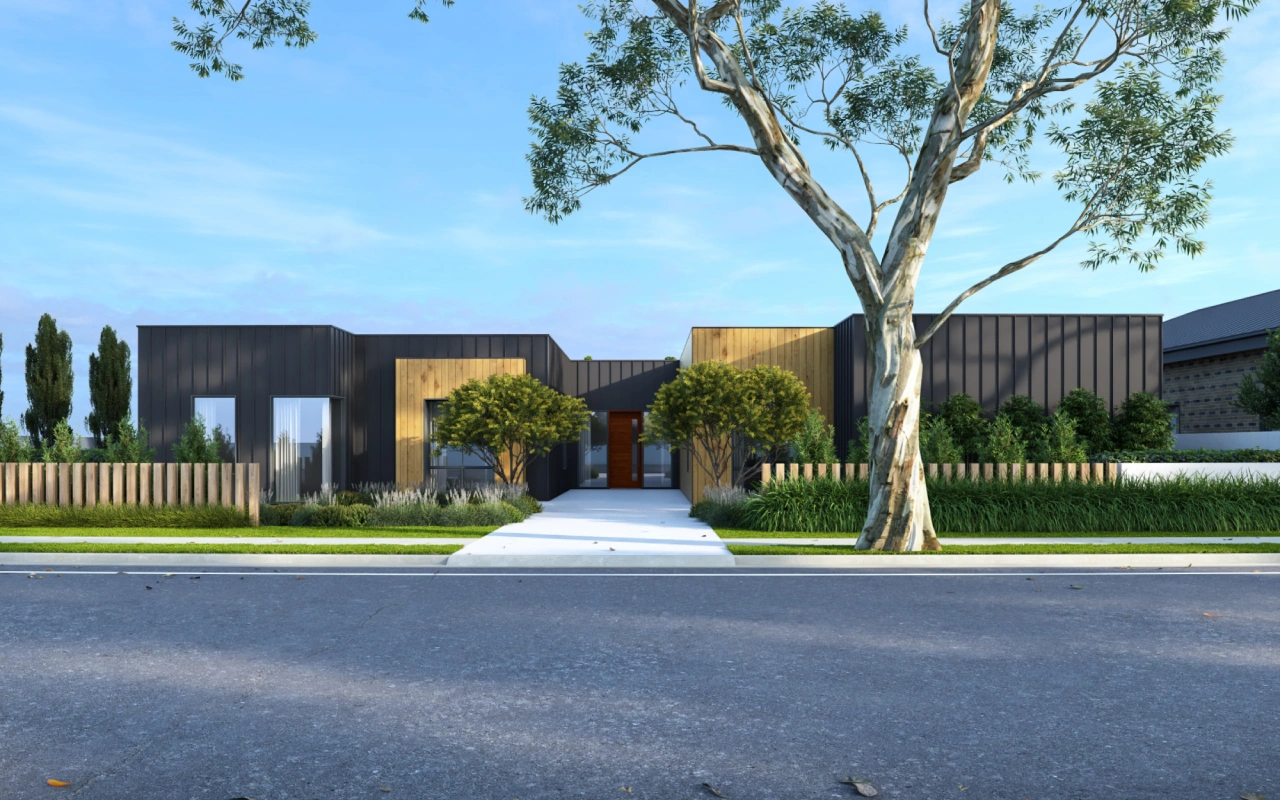

The project is an exercise in programmatic layering. It rejects the traditional “central hall” villa model in favor of a decentralized, modular layout. By utilizing shared wall lines and consolidated service zones, the design achieves high residential density while maintaining individual privacy. It is a pragmatic architectural response to the need for versatile, multi-unit housing, balancing the rigid requirements of technical construction with the fluid needs of contemporary co-habitation.
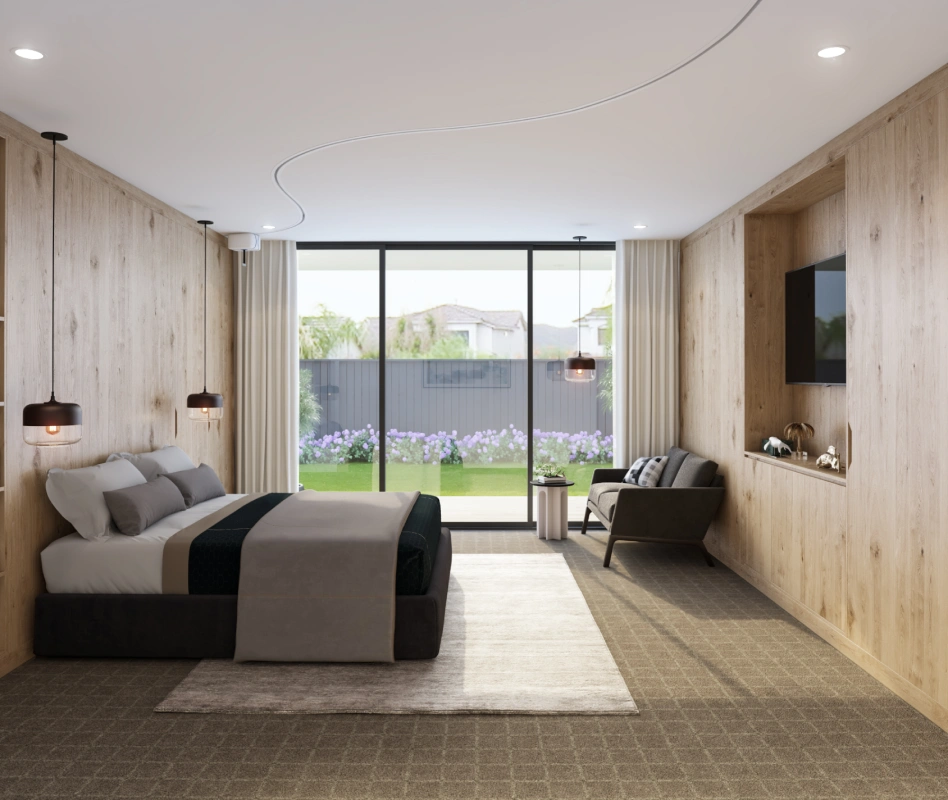
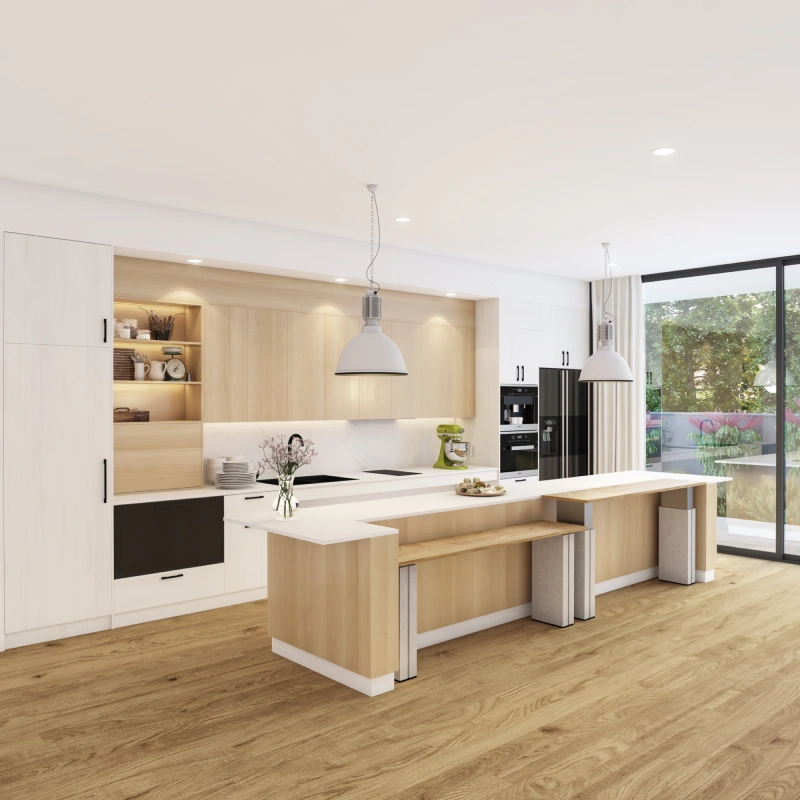
The corridors are designed with generous widths to facilitate wheelchair maneuverability and curbless design preventing trip hazards and allowing for continuous mobility across different functional zones.
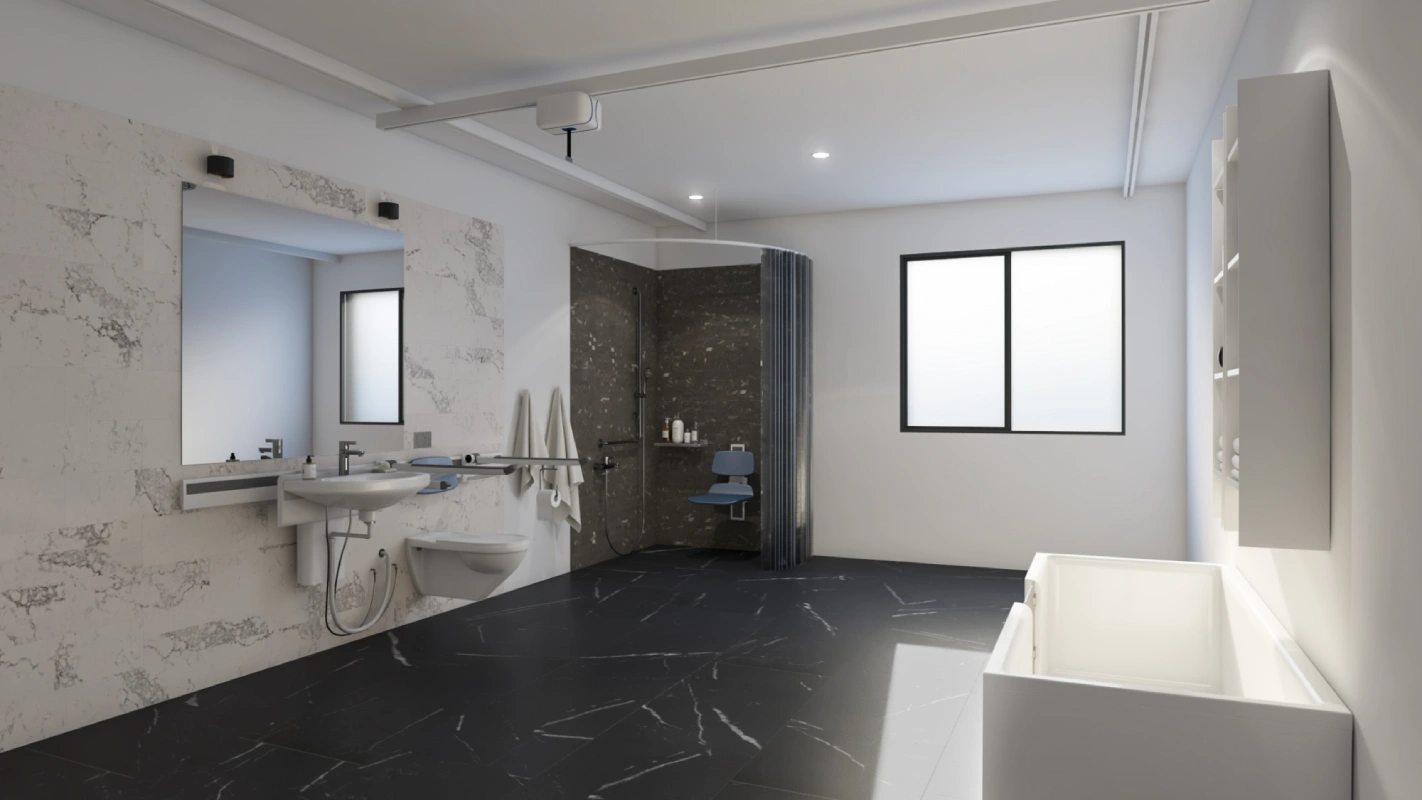
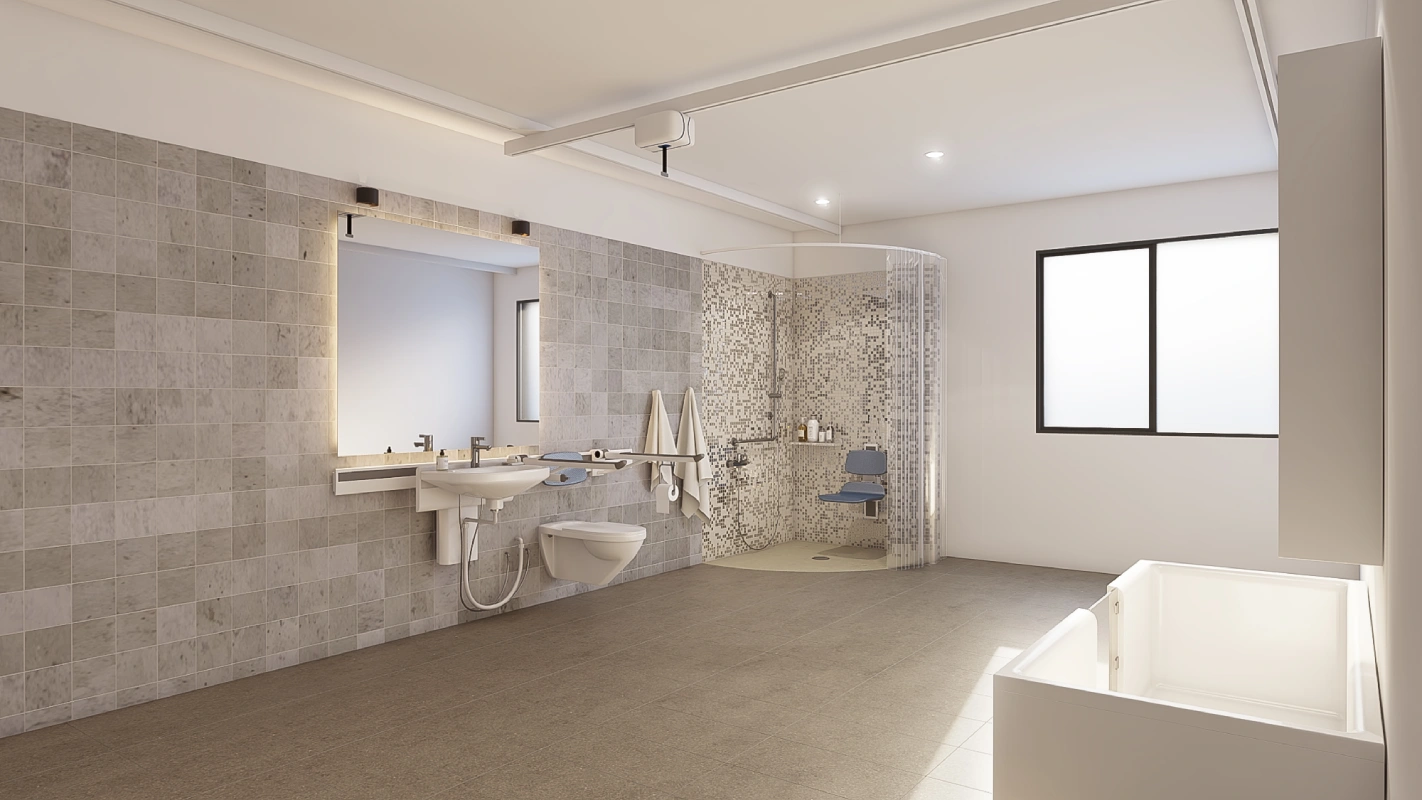
The ensuites reflect a Decentralized Care Model. By placing specialized ensuite adjacent to every sleeping quarters, the design eliminates travel distances, a core tenet of Universal Design Theory.
Service
Architecture

Sector
NDIS Housing

Budget
AUD 2.5M

Land Area
900 sq. m

Built Area
545 sq. m

UNITS
2

Bedrooms
6

OOA rooms
2

Parking
3